Sodium Calculator for Endurance Athletes (Free Tool): The Short Answer
Sweat sodium concentration varies 3 to 4 times across athletes, from about 200 mg per liter in low-sodium sweaters to over 2,000 mg per liter in salty sweaters, so generic electrolyte advice fails. This free sodium calculator sets your hourly sodium target, fluid range, and a pre-race loading plan from body weight, sweat history, event duration, and race-day climate. It takes about 60 seconds and emails a PDF cheatsheet; no purchase required.
The Ultimate
VO2 Max System
- Acute Nitric Oxide Vasodilation
- Chronic Lactic Acid Buffering
- Stimulant Free, cGMP Certified Manufacturing
Why a Generic Electrolyte Plan Will Fail You
Sweat sodium concentration varies 3 to 4 times across individuals, from about 200 mg per liter in low-sodium sweaters to over 2,000 mg per liter in salty sweaters. That single variable is why one-size-fits-all electrolyte advice fails so often in long-course racing, and why a personalized calculator beats a flat per-hour number.
Sweat sodium concentration varies 3 to 4 times across individuals. Low-sodium sweaters lose about 200 mg of sodium per liter of sweat. Salty sweaters can lose over 2,000 mg per liter. That single variable is the reason one-size-fits-all electrolyte advice fails so often in long-course racing.
If you need 1,500 mg of sodium per hour and take 500 mg, your muscles will start to cramp before the back half of your race. If you only need 400 mg per hour and take 1,500 mg, you risk drifting toward hyponatremia, a dangerous dilution of blood sodium that has killed marathoners and ultra runners (Almond et al., NEJM 2005).
The math is not optional. The math is also not generic.
That is why we built a free sodium and fluid calculator at our sodium calculator. It estimates your hourly sodium target, your fluid intake range, and a complete electrolyte plan calibrated to your body weight, your sweat profile, your event distance, and your race-day climate.
What the Calculator Gives You
The sodium calculator takes about 60 seconds of inputs (event type, duration, body weight, sweat history, and race-day climate) and outputs an hourly sodium target, a fluid intake range, a pre-race loading plan, and a branded PDF cheatsheet emailed to your inbox, with no purchase required.
Inputs take about 60 seconds:
- Event type (10 profiles, from half marathon to 24-hour ultra, 70.3, 140.6, gravel, gran fondo, OCR)
- Target duration
- Body weight and sex
- Sweat history (low, average, salty, very salty, based on visible salt residue and cramping history)
- Climate (cool, mild, hot, hot and humid)
Outputs are concrete and race-ready:
- Your hourly sodium target in milligrams
- Your hourly fluid range in ounces and milliliters
- Estimated total sodium loss across the event
- Hour-by-hour breakdown
- Pre-race sodium loading plan for the 24 hours before the start gun
- Sodium sources reference table (salt tabs, capsules, drink mixes, real food, pickle juice, bouillon)
- Branded PDF cheatsheet emailed to your inbox
There is no paywall and no purchase required.
Why Sodium Drives Performance
Sodium is the primary electrolyte lost in sweat, and when blood sodium drops too low during prolonged exercise, muscle contraction becomes less efficient, cramping risk rises, fluid balance breaks down toward hyponatremia, and cognitive performance for pacing and fueling decisions suffers. Getting sodium right protects every other system in a race plan.
Sodium is the primary electrolyte you lose in sweat. When blood sodium drops too low during prolonged exercise, several things go wrong at once:
- Muscle contraction becomes inefficient. Sodium gradients across muscle cell membranes power every contraction. When the gradient flattens, force production drops and the perceived effort of any given pace goes up.
- Cramping risk rises sharply. While cramping is multifactorial (neuromuscular fatigue plays a role too), sodium loss is a major contributor in long, hot events. The athletes who cramp at mile 18 of a marathon are almost always under-replacing sodium relative to their losses.
- Fluid balance breaks down. Sodium is what holds fluid in your bloodstream. Take in too much water without proportional sodium and your blood gets dilute. That is hyponatremia, and at race distances over four hours it is a real risk for athletes who drink to thirst plus extra.
- Cognitive performance suffers. Pacing decisions, fueling decisions, gear changes on a bike, line choices in a gravel race. All of these get worse as blood sodium drops.
Get sodium right and you protect every other system in your race plan.
The Three Variables Most Calculators Miss
Most electrolyte calculators multiply body weight by a single coefficient and miss the three variables that drive 60 to 80 percent of real-world variance in sodium needs: sweat sodium concentration, race-day climate (sweat rate roughly doubles between cool and hot conditions), and event duration. Two athletes with identical body weights can end up with hourly sodium targets that differ by a factor of three.
Most electrolyte calculators take your body weight, multiply it by a single coefficient, and hand you one number. That misses three variables that drive 60 to 80 percent of the real-world variance in sodium needs.
Variable one: sweat sodium concentration. Visible salt crust on your jersey, frequent cramping in long efforts, a salty taste on your skin after training. These are proxies for high sweat sodium concentration. Lab-measured sweat sodium tests (a patch test on the forearm during a sweat-inducing workout) are the gold standard. Until you do one, sweat history is the best proxy and we weight it heavily.
Variable two: climate. A cool 55-degree marathon and a hot-humid 88-degree marathon are not the same event for the same athlete. Sweat rate roughly doubles between cool and hot conditions. Sodium loss tracks sweat rate. Our calculator adjusts both your fluid and sodium targets based on which of four climate bands you select.
Variable three: duration. A 90-minute half marathon and a 12-hour ultra are different metabolic events. Short events tolerate under-replacement because the loss has not yet accumulated. Long events punish it severely. Sodium loading 24 hours before the start matters much more for ultras than for an Olympic-distance triathlon.
Our calculator weights all three of these variables. That is why two athletes with identical body weights can end up with hourly sodium targets that differ by a factor of three.
The Hyponatremia Side of the Equation
Over-prescribing sodium isn't the only risk: athletes who drink to "stay ahead" of thirst can dilute plasma sodium into dangerous hyponatremia, which has killed otherwise healthy people in long-course events (Almond et al., NEJM 2005). For events over 12 hours, the calculator surfaces a hyponatremia warning and treats the calculated fluid range as a ceiling, not a floor.
We are careful in the calculator not to over-prescribe sodium. For a broader look at how sodium fits alongside other electrolytes, see muscle cramps in athletes: causes and realistic prevention. Athletes who push very high sodium intake with low fluid intake can run into the opposite problem: hypertonic dehydration. And athletes who drink to "stay ahead" of thirst can flood their plasma and develop dilutional hyponatremia, which has killed otherwise healthy people in long-course events.
For long-duration events (12-hour and 24-hour ultras, full triathlons), the calculator surfaces a hyponatremia warning with specific guidance: do not over-drink, match fluids to thirst, and rely on the calculated fluid range as a ceiling, not a floor.
The goal is not maximum sodium. The goal is matched sodium and matched fluid for your body in your conditions.
When You Are Ready to Fuel
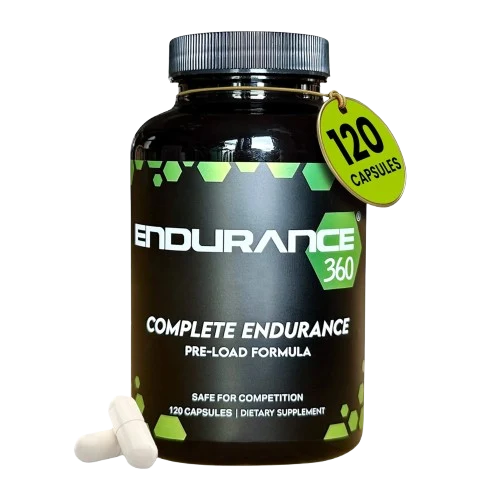
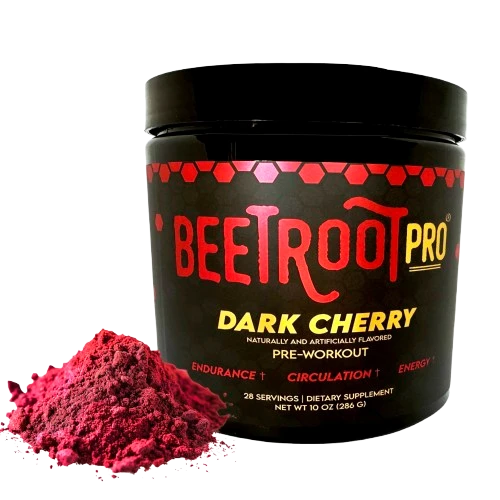
Sodium and fluid are only one side of race-day execution; the other is oxygen delivery and cellular endurance. Beetroot Pro delivers patented nitrate for race-day vasodilation and oxygen economy, while Endurance360® supports mitochondrial function, lactate buffering, and recovery across a training block.
The calculator covers sodium and fluid. The other side of race-day execution is what fuels the watts: nitric oxide for blood flow and oxygen efficiency, plus the long-game cellular endurance work that makes the engine bigger in the first place.
That is what the Breakaway Pack is built for. Beetroot Pro delivers patented nitrate for race-day vasodilation and oxygen economy. Endurance360 supports the cellular endurance machinery (mitochondrial function, lactate buffering, recovery) across a training block. The same athletes pacing themselves with our tools fuel themselves with the system.
Use the Calculator Before Your Next Race
The sodium calculator is live now, takes 60 seconds, and emails a branded PDF cheatsheet with a starting plan you can validate against your own training data.
The calculator is live now at our sodium calculator. It takes 60 seconds, emails you a branded PDF cheatsheet, and gives you a starting plan you can validate against your own training data.
We have additional sodium tooling already in development (tighter calibration against lab sweat tests, product matching against your specific electrolyte SKUs, and a pre-load math refinement). Use the current calculator now; you will see the upgrades land automatically as they ship.
Build your plan. Race the math.
References
The sodium and fluid guidance in this post and in the calculator is grounded in peer-reviewed exercise physiology research, including the ACSM position stand on fluid replacement and the landmark Boston Marathon hyponatremia study.
- Sawka MN et al. (2007). ACSM Position Stand: exercise and fluid replacement. Med Sci Sports Exerc 39(2), 377-390. PMID 17277604.
- Baker LB et al. (2016). Sweating rate and sweat sodium concentration in athletes: a review of methodology and intra/interindividual variability. Sports Med 46(Suppl 1), 111-128.
- Almond CSD et al. (2005). Hyponatremia among runners in the Boston Marathon. N Engl J Med 352, 1550-1556.
- Montain SJ et al. (2006). Sweat mineral-element responses during 7h exercise-heat stress. Int J Sport Nutr Exerc Metab 17(6), 574-582. PMID 18156666.
- Maughan RJ, Shirreffs SM (2012). Hydration and performance during exercise in heat. J Sports Sci 30 Suppl 1, S33-S41.
Technical FAQ Extension
How do I calculate my sodium needs during an endurance race?
Your hourly sodium target depends on body weight, sweat rate, sweat sodium concentration, and environmental temperature. Most athletes in temperate conditions need 500 to 800 mg per hour. Heavy sweaters in hot weather can require 1,000 to 1,500 mg per hour. The Beetroot Pro Sodium Calculator estimates your target from body weight, sweat profile, sport, and race conditions, returning gram weights for both NaCl and sodium citrate.
What happens if I take too little sodium during a long race?
Inadequate sodium replacement combined with high fluid intake causes hyponatremia (blood sodium below 135 mEq/L), which is potentially fatal in severe cases. Symptoms progress from nausea and headache to confusion, seizure, and cerebral edema. The 2005 Boston Marathon study found 13% of finishers had clinically low sodium. The most common cause is drinking excessive plain water while failing to replace sodium.
Is sodium citrate better than table salt for endurance athletes?
Sodium citrate is preferred for high-dose sodium replacement (above 500 mg per hour) because it is dramatically less briny than table salt (NaCl) at equivalent sodium doses. Sodium citrate delivers 270 mg of sodium per gram, versus 393 mg per gram for NaCl. At 800 to 1,200 mg per hour, the brackish taste of NaCl causes nausea in many athletes, while sodium citrate dissolves cleanly with minimal flavour impact.
Continue reading
Related Articles

Jun 2, 2026
Best Supplements for Energy in Endurance Athletes
The best energy supplements for endurance athletes: dietary nitrate, caffeine, creatine, and beta-alanine. Different mechanisms that combine cleanly.
Apr 13, 2026
Why Endurance Athletes Need More Carbohydrate
Carbohydrate is the limiting fuel for endurance. Why glycogen runs the show, grams per hour by duration, and how to train your gut to take more.
Apr 13, 2026
What Limits the Stamina of Endurance Athletes?
Endurance is limited by four systems: oxygen delivery, lactate clearance, glycogen, and central fatigue. What each one does and how to train around them.
The Ultimate
VO2 Max System
- Acute Nitric Oxide Vasodilation
- Chronic Lactic Acid Buffering
- Stimulant Free, cGMP Certified Manufacturing
*Technical citations and PubMed references are provided for performance education only. These statements have not been evaluated by the FDA.