Beetroot for Running: Dose, Timing, and Pre-Run Prep: The Short Answer
Beetroot helps running by lowering the oxygen cost of a given pace by 1 to 3 percent, roughly 2 to 7 minutes off a 4-hour marathon. Take one serving delivering 300 to 600 mg of dietary nitrate (a standardized extract makes this verifiable) 60 to 90 minutes before a run. For a goal race, load daily for 3 to 6 days first, then take a final dose on the morning of the run. Pair it with a carbohydrate-topped, hydrated, electrolyte-balanced pre-run routine.
Beetroot helps running by reducing the oxygen cost of a given pace by 1 to 3 percent, which for a trained runner is roughly 2 to 7 minutes off a 4-hour marathon. Take one serving delivering 300 to 600 mg of dietary nitrate about 60 to 90 minutes before a run, and load daily for 3 to 6 days before a goal race. The effect is strongest at threshold pace and over sustained efforts, exactly where distance runners need it.
Beetroot is one of the most evidence-backed supplements a runner can use, but most of the guidance online is vague about the two things that actually decide whether it works: the dose and the timing. This guide gives you both, by race distance, plus the full pre-run prep checklist that makes the nitrate do its job.
Does Beetroot Help Running?
Yes. The dietary nitrate in beetroot converts to nitric oxide, a vasodilator that widens blood vessels and lowers the oxygen cost of running at a given pace. Across controlled studies the reduction is 1 to 3 percent, which sounds small until you translate it to time at race pace: roughly 2 to 7 minutes over a 4-hour marathon, with the largest gains at threshold and over long sustained efforts.
A 2009 study in the Journal of Applied Physiology found dietary nitrate reduced the oxygen cost of submaximal running by about 5 percent. The practical translation for a runner is holding the same pace at a lower heart rate and perceived effort, or holding a faster pace for the same effort. It does not raise your VO2 max ceiling; it makes every stride cheaper in oxygen, which is why the benefit compounds the longer you run.
How Much Beetroot Should I Take Before a Run?
Dose by milligrams of dietary nitrate, not grams of powder. The clinical range is 300 to 600 mg of dietary nitrate (about 5 to 8 mmol) per serving. A standardized extract discloses this number; most raw beet powders and juices do not, which is why an unstandardized product is a coin flip. Take one serving 60 to 90 minutes before a run, and load daily for 3 to 6 days before a goal race.
| Run type | Dietary nitrate | When to take | Loading |
|---|---|---|---|
| Easy or daily run | 300 to 400 mg | 60 to 90 min before | Optional |
| 5K / 10K race | 400 to 600 mg | 90 min before | 3 days prior |
| Half / full marathon | 400 to 600 mg | 90 min before | 3 to 6 days prior |
| Ultramarathon | 400 to 600 mg | 60 to 90 min before, repeat at hour 3 to 4 | 5 to 6 days prior |
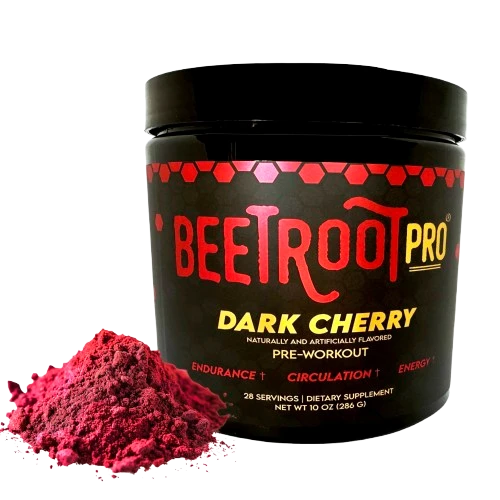
The reason the milligram number matters is that nitrate content varies roughly 100x across commercial beet products. A scoop of raw powder might deliver 30 mg or 400 mg, and the label rarely tells you which. Beetroot Pro standardizes each serving to 400 to 500 mg of disclosed dietary nitrate, which is why a runner can reliably hit the clinical range from a single drink. For the full dose breakdown by goal, see how much beetroot powder per day.
RACE_DAY_READINESS
How Race-Ready Is Your Fueling Plan?
Question 1 of 4
Do you know your carbs-per-hour target?
When Should I Take Beetroot Before Running?
Take a standardized beetroot extract 60 to 90 minutes before a run. Plasma nitrite peaks around 60 to 90 minutes and stays elevated for several hours, so a single pre-run serving covers most race distances. Raw beet juice absorbs more slowly and is usually taken 2 to 3 hours out. Avoid antibacterial mouthwash on running days, because it kills the oral bacteria that convert nitrate to nitric oxide and cancels the effect.
For runs longer than about four hours, a second serving around hour 3 to 4 maintains vasodilation through the back half. The timing difference between extract and juice is operational but real: a 60 to 90 minute window fits a normal pre-race routine, while a 2 to 3 hour window means waking earlier. See the full 60-minute pre-run timing protocol for the absorption detail.
Beetroot Powder or Juice for Runners?
For runners, a standardized powder is usually the better race-day choice: it delivers a disclosed, consistent nitrate dose with 0 g of added sugar, packs flat for travel, and needs no refrigeration. Beet juice has the larger research footprint but carries 13 to 17 g of sugar per shot, varies in nitrate content batch to batch, and needs to be taken earlier. Both work through the same nitrate pathway.
The deciding factors for a runner are GI comfort at race intensity and dose certainty. Raw powders and juices retain fiber that can trigger cramps during hard efforts; a refined extract removes it. For the complete head-to-head, see beetroot powder vs beet juice.
The Full Pre-Run Prep Checklist
Nitrate timing is one lever among six. A complete pre-run routine also covers carb loading (8 to 12 g per kilogram of body weight for 3 to 4 days out), hydration, sodium, a timed pre-run meal, and caffeine if used. Stacking all six is what separates a runner who "took beetroot once" from one who executes a repeatable race-day protocol.
For a long run or race, dietary nitrate works best on top of a properly fueled and hydrated base, not as a standalone trick. Here is the routine that surrounds it.
- Carb-up strategically. Build glycogen with 8 to 12 g of carbohydrate per kilogram of body weight starting 3 to 4 days before a long run or race, leaning on complex carbohydrate sources for lasting energy. Use the carb fueling calculator to turn that ratio into a personalized daily gram target and a race-morning fueling plan.
- Hydrate in advance. Aim for clear to light-yellow urine, and drink 500 to 600 mL (17 to 20 oz) of water or a sports drink a few hours before you start.
- Balance electrolytes. Pre-load sodium with a sports drink or lightly salted meals to maintain fluid balance, especially before a hot or long effort.
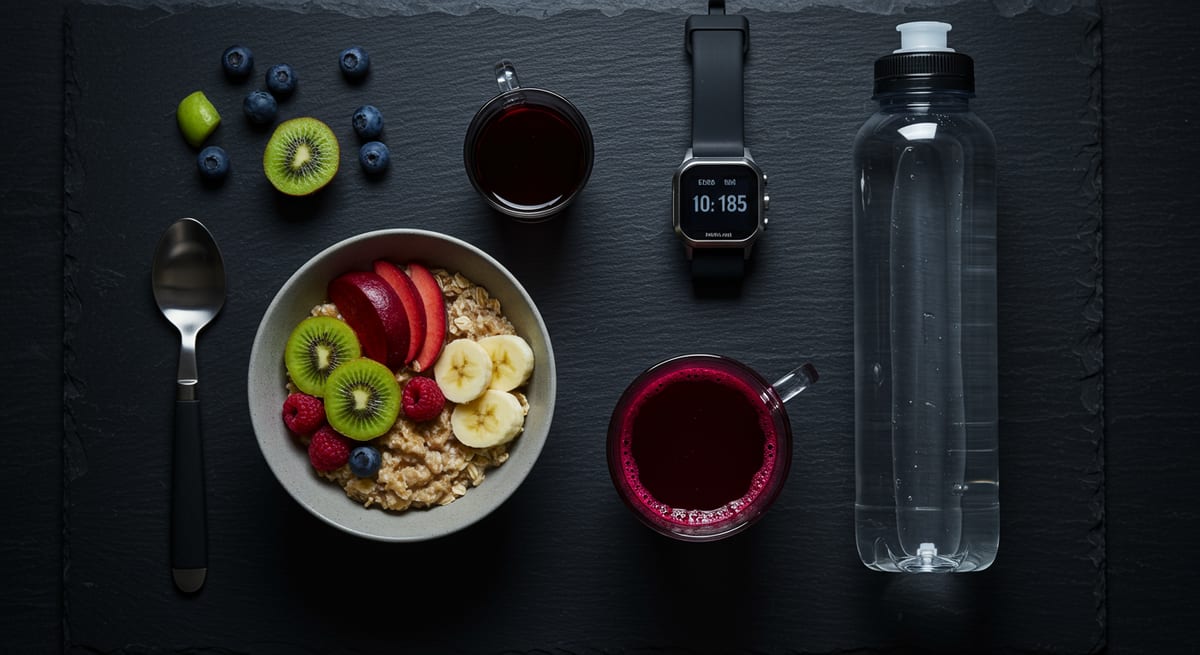
- Eat a smart pre-run meal. A carb-rich, moderate-protein, low-fat meal 3 to 4 hours out (oatmeal with fruit, a lean sandwich) provides energy without stomach upset.
- Time your beetroot. One serving of standardized dietary nitrate 60 to 90 minutes before the run, per the dosing table above.
- Layer caffeine if you use it. 3 to 6 mg/kg about an hour before exercise enhances endurance and acts through a different pathway than nitrate, so the two stack cleanly.
Always test these strategies in training, never for the first time on race day. For the runner-specific protocol, dosing, and the studies behind it, see our best beetroot powder for runners page.
FDA Disclaimer: These statements have not been evaluated by the Food and Drug Administration. This product is not intended to diagnose, treat, cure, or prevent any disease.
Technical FAQ Extension
Is beetroot powder good for running?
Yes. Beetroot is one of the most evidence-backed supplements for running. Its dietary nitrate converts to nitric oxide, which lowers the oxygen cost of running at a given pace by 1 to 3 percent, roughly 2 to 7 minutes off a 4-hour marathon. The benefit is strongest at threshold pace and over long sustained efforts where oxygen cost accumulates over the miles.
How much beetroot should I take before a run?
Take one serving delivering 300 to 600 mg of dietary nitrate about 60 to 90 minutes before a run. A standardized extract discloses this number (Beetroot Pro delivers 400 to 500 mg), while most raw powders do not. For a goal race, load with one serving daily for 3 to 6 days beforehand, then take a final serving on the morning of the run.
When should I take beetroot before running?
Take a standardized beetroot extract 60 to 90 minutes before a run, since plasma nitrite peaks around that window and stays elevated for several hours. Raw beet juice absorbs more slowly and is usually taken 2 to 3 hours out. Avoid antibacterial mouthwash on running days, as it kills the oral bacteria that convert nitrate to nitric oxide.
Is beetroot powder or juice better for runners?
For runners, a standardized powder is usually the better race-day choice: a disclosed consistent nitrate dose, 0 g added sugar, shelf stable, and a shorter pre-run window. Beet juice has the larger research footprint but carries 13 to 17 g of sugar per shot and varies batch to batch. Both work through the same nitrate-to-nitric-oxide pathway.
Continue reading
Related Articles

Jul 25, 2026
Beetroot Powder as a Pre-Workout: Does It Replace Stimulants?
Beetroot powder works as a pre-workout through vasodilation, not stimulation. Here is the mechanism, the dosing window, and when it beats (or loses to) caffeine.
Apr 13, 2026
How Much Beetroot Juice Before a Workout? (500ml)
Drink 500ml of beetroot juice 60 to 90 minutes before training to hit the clinical 300 to 600mg nitrate dose. Full timing and dosing protocol inside.

Jun 19, 2026
Beetroot for Female Endurance Athletes: Dosing Guide
Female endurance athletes need 5-8 mmol dietary nitrate 2-3 hours pre-race, but iron deficiency cuts conversion efficiency up to 40%.
Technical
Beetroot Pro
- Patented betaine nitrate
- Acute Oxygen Efficiency
- Low Sugar / Oxalate Free
*Technical citations and PubMed references are provided for performance education only. These statements have not been evaluated by the FDA.